Blog

Wednesday Telos New Orleans, St John Parish, Selma, Oh my!

It is late Wednesday night, past 11, when I reach my room. I will try to write this, likely finished on Thursday morning.

I rose before my alarm, which was set twice, just in case, but I did sleep some. I was up to 1 a.m. the night before writing the blog. It was a difficult start, but the shower and mainly having packed the night before made it less of a mad rush. I did make coffee from the in-room coffee machine and replugged in the floor lamp. Now, at the last moment, I see the light switch I missed before. My phone, laptop, and battery were now fully charged.

I rolled my bag with my usual carry-on and headed down to the lobby. I thought I left the key upstairs—no matter—and I checked out (I found the key when I tried to get into my room here at a new hotel in Selma). I found at Holmes the name of the coffee bar and the former name of the department store that was here before. I ordered two coffees with danishes for Dondrea and me. Dondrea showed up a bit later. Ken, who also appeared, got breakfast while we chatted about our experiences.

We were back on the bus, but this time with our bags loaded. We stopped by Loyola University in New Orleans and were soon met by a bearded man with bright eyes, an infectious smile, and impeccable manners, wearing a shirt and tie. The room—a college lecture room—and Professor Will Snowden, a former public defender, were ready for us, with a PowerPoint already glowing on a board and a handout provided. Will Snowden is an advocate for improving juries, especially at the local level. We were here to hear about The Juror Project.

Simply put, the project is to make us all better jurors, looking forward to our duty, fulfilling our responsibilities to be available as jurors, and exercising our rights. Even now, the pools from which juries are drawn and the process seem to yield all-white male juries. Other issues, like low pay and poor sourcing of potential jury lists, threaten the process. For a trial and its verdict to be legitimate, the ‘promise of a jury of our peers’ must be kept.

Professor Snowden demonstrated the processes and discussed what he considers some of the issues in forming a jury. He took questions, and we even went over the changes to juries in Louisiana and Oregon. He covered Jury Nullification, when a jury refuses to convict someone even though the evidence is clear that a crime occurred. Often, he explains, this happens when a jury refuses to convict when they think the charge should be replaced with getting some help for an addiction. I was once on a jury and we refused to convict a person of a civil rights charge, as it seemed to us a ridiculous charge. We voted it down 0-12 to the surprise of the prosecutor.

Lunch was boxes from a famous sandwich place, Francolini’s, in New Orleans. Dondrea and I split a monster Gaga sandwich. We ate this on picnic tables that, obviously, being sunk into the earth, were now too low. We had a tour of the Whitney Plantation from the 1790s after lunch.

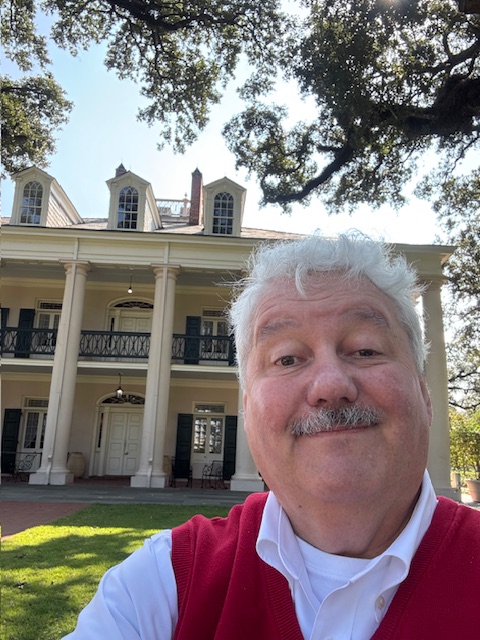
Our guide, James Kelly, gave us an excellent and often emotional tour of the sights. Many of these buildings had been moved here or moved from the original plantation or another location to a circle that allows easy tours. Two slave houses had survived, and I walked inside. It was sad to see the terrible place and boards and beams built by slaves and used by them. In our tour of Oak Ally Plantation, there were reconstructions, but these were real.
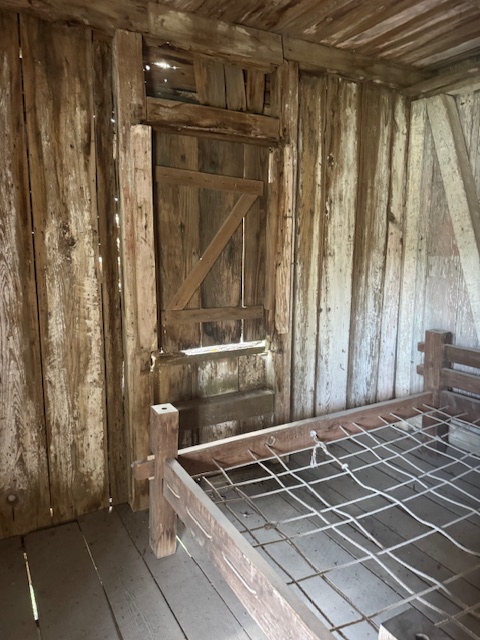
A church is on the grounds that was built by freed slaves right after the end of slavery. The building was replaced by a newer structure and the orginal hand built structure moved to the planataion to be seen by vistors and to hear their story.


James Kelly does only a few tours a week. He is a researcher and is very passionate about the false rewriting of history and abandoning the facts, and he calls it out on the tour. There is a horrific memorial to a large local slave revolt that failed. I saw him pick a rose, kneel on the ground before the name of the leader, a woman who was executed, and leave it on her nameplate. He then prayed. He rose, another guide told the story, and then James added more.

Aside: James reasoned that the revolt leaders were not planning to escape but to fight. I agreed with him. Napoleon grabbed a few cannons in Paris, along with some men, and rescued the government from a crowd. His success gave him his first leadership role in France. I cannot imagine the story, fresh, was not retold by other would-be revolutionaries. So I told James, for this reason, I think he is right. He liked the idea.

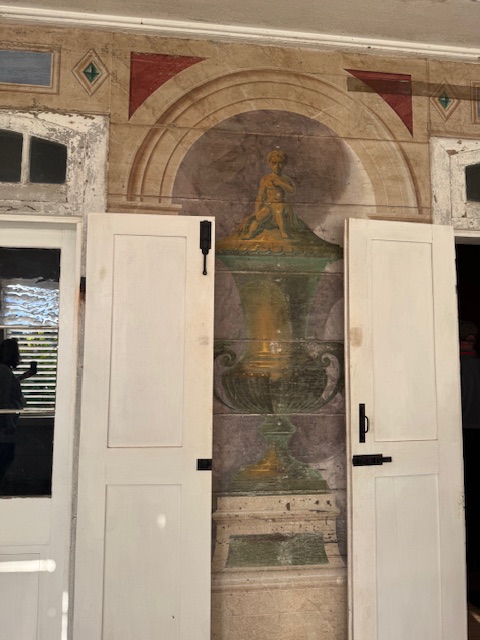
James walked us through the exhibits, some purchased from auctions from other plantations, but most were real or close to the originals. He took us into the Big House, which was empty of furniture and in good repair, and included paintings from the 1850s. I was surprised by the floor, open boards just under 1/2 of wood. Minimal, and I wonder how much furniture it could hold up.
James took us to the garden where the children who were lost to slavery are remembered. Thousands of names of children with their dates of death, a Victor dying on my birthday, passing away 110 years before my birth. It was hard not to cry, and this was only the names they had for children lost at Whitney Plantation. I did cry at the memorial for the revolt.

DeSean gave a lecture on the moving bus; he waited a while. We had five hours of busing (irony of those words was not lost on me) to reach Selma, Alabama. DeSean covered “The Civil War Reconstruction and the March to Civil Rights.” This area was history I knew well, and many could answer DeSean’s questions.
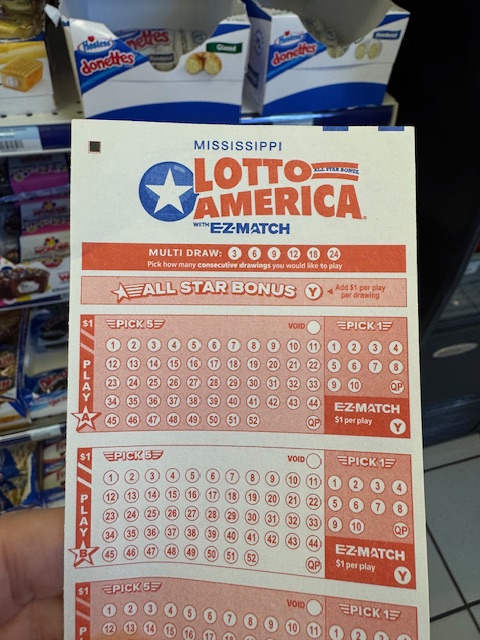
We stopped for a break in Mississippi. I found this.

The people of color with us shared that they were experiencing rage, grief, and acknowledgment that they were survivors of slavery. I felt the story of Whitney hurt me and weighed heavily. DeSean, our leader and a person of color, told us he understood the material weighed against us. He had given us a break while we processed.

DeSean’s words seemed stronger now: “We encounter hard truths; they cause emotions.” The buildings show the skills of the enslaved labor, he pointed out. He explains that everyone lost the American Civil War, not just the South. The destruction and the abandonment of Reconstruction restored many of the evils of slavery under the new Jim Crow and Black Codes. The Klan rises. The false replacement history of the Lost Cause, the false legend of Bobby Lee (as pointed out early by James Kelly), and the false legend of a noble war of good people resisting an out-of-control central government soon fill our textbooks and school lectures. The truth is lost (and seems to be the focus of the current government, which is again raising this false story).

Aside: Sorry if these words are a bit unfiltered. I wanted to capture my feeling and my understanding of the story I was told.

The long bus ride includes a nap for me and Dondrea (and others, I am sure). DeSean takes up the microphone again and covers the post-war horrors of the Memphis and Clinton Massacres. We arrive at 9ish for a later dinner served to us by a local group in Selma, By the River Center for Humanity. There, after a plain but excellent pasta with white chicken sauce or a ground beef tomato sauce. I have both.
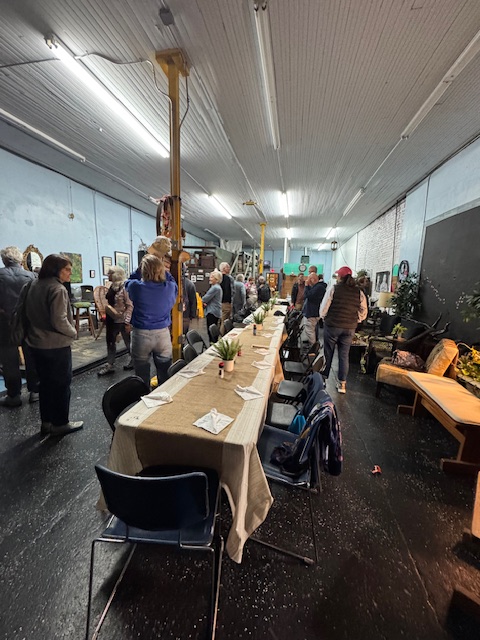
Anika Jackson, also serving us, is a leader in nonviolence here in Selma. She tells us some of her words: “Truth is not to be argued,” “We are not sure we are right and so we argue,” not white/black but our history, “Once I love myself and my people, I can love others,”  and when I remember I am the servant and not the savior, it works.

We were all tired, dazed, confused, and angry. She had us dance and sing, and that helped. It wrapped those hard feelings and weighty topics in music, dance, and fun.
Soon, we were in yet another hotel, and I was happy to slip under the sheets and dream of nothing, as only tears and screaming were possible in those dreams. Pure calming darkness was welcome.

Thanks for reading.


Tuesday First Full Day on Telos Tour

I rose today at 6:45 and was ready for the breakfast bar provided at the meeting. The food was good; New Orleans never serves anything that is not good. I had finished the blog and slept, waking a few times.

DeSean and Frances from Telos were there, and DeSean gave us a PowerPoint presentation over the next couple of hours entitled “Belief, Brutality, and the Business of Slavery.” There were a few points of input and discussion, but mostly it was, in many ways, a depressing and harsh look at Slavery and also the fate of the indigenous people.

DeSean used words like “continue grounding ourselves,” “grief of the reality,” “legal fiction and out of the ether” for truths we think we know, our place here in the city in a state in the USA, but also a reality of being Chitimachu Tribal Lands, “empires say we don’t see culture and divine,” to kill people first redefine people to be associated with the land, “what we do with this knowledge is to peel back the reasons,” and “slavery was engineered,” and needs tools (religion, laws, trade and commerce, and story and narrative).

DeSean describes the fate of native peoples as a lesson on how oppression works. He calls out the book The Great Evil: Christianity, the Bible, and the Native American Genocide by Chris Nunpa as supplying him with this story. He then listed some quotes that hinted at slavery, and we guessed their sources, including John Locke and the USA founding documents. One of the participants quoted, “Every accusation is a confession,” and we thought that fit well with these quotes. I had not heard it before, to my recollection, but in a Google search, I learned it is a well-known saying, not a quote.

We then covered Code Noir, which is the Spanish rules for slavery. The purpose was to establish regulations that offered hope and some rights to the enslaved. It mainly was, according to Desean, a method to prevent uprising. Oppression mixed with religion. DeSean said that slavery was profitable, and during the days of slavery, the state of Mississippi had more millionaires than any other state. “This is a serious system. It takes this kind of seriousness to work these injustices,” DeSean concluded.

Note: I don’t usually tell someone else’s story, but this time I think it is appropriate.

We boarded our bus and soon headed across New Orleans to St Roch Community Church to meet Jerome and Robyn (may be ‘Robert’ and I heard wrong). They were wrongly convicted and jailed for years. They described their story, and I tried to follow along. I was not close, and the sound system did not improve my hearing. What I took away was that both were undereducated and, with no real opportunities, turned to drugs and crime. They were in the area of a murder, and were scapegoats, or in the words of one judge, Robyn told us, said, “the evidence is confused, but you look like the kind of kid that would do this.” Both were legally convicted without real evidence, and questionable tactics were used to assemble witnesses to identify them (these tactics are no longer legal).

Jerome told his story first, and he said to us, “Making the world better will take all of us.” He could not believe, as he was brought into the facility for a life sentence, that folks were manually picking cotton. He spent years getting an education and finally got help to exonerate himself.

Robyn said he had finally gotten himself a GED and an education and finally connected with folks to help him. But the legal system still continued to pursue charges against him. It took long years and money from his family to finally be declared innocent. “Allegiance to the truth and not being motivated by fear” is how to live and survive tragedy.

Both Jerome and Robyn told us they both knew they were innocent and believed, at first, that the mistake of conficting them would just be corrected. That the system of justice would naturally exonerate them, but it did not. It took years, and they had to get an education and help to get released. In the end, they said, we are human and we must help each other. Their foundation is here.

I have often wondered about the work of Prison Ministry, and the story made me think about how I could help. I am unsure if I can fit it into my life or my church’s work. Michael R., Dondrea, and I talked about it later at dinner. Hmmm.

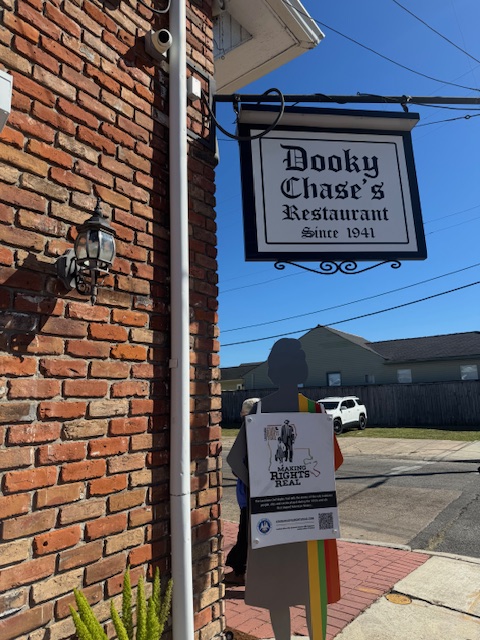
Next, we stopped by Dooky Chase’s for lunch, which was listed in the Green Book (here, if you don’t know its story) as a safe place for people of color to dine. I had the fish and it was divine. Dondrea tried the fried chicken, which was good. I have always wanted to try the place and experience the ambiance of an institution that is now. The gumbo was excellent, and the sausage in the soup was spicy and clearly local. Outside, carved in stone were the names of presidents, Supreme Court Justices, famous actors, and people who have all eaten there. And while I don’t expect to be added to the list of names outside, I did feel like I checked off something on my list.


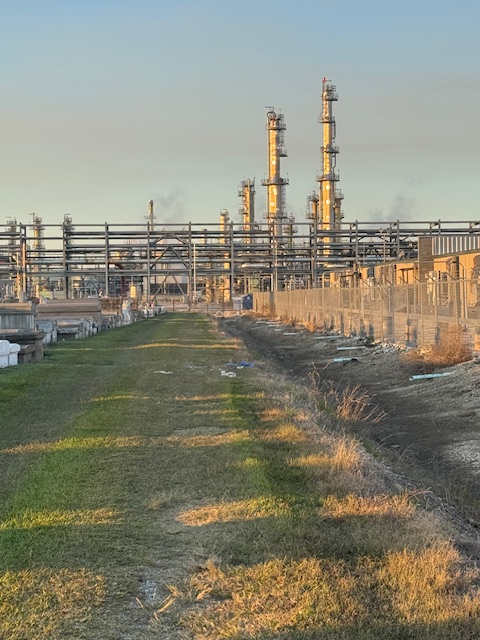
Cancer Alley is a part of St. John Parish that is full of more than a dozen chemical plants that have the highest cancer rate in the USA, according to Tish Taylor and activists who live there. We picked her up on the bus as we entered the area. She explained that folks of color were redlined out of other places, but they all felt lucky to get a lovely home in beautiful St. John Parish. The old plantation land was being offered to them. They did not know that the chemical companies were also provided the land, and that their land was considered sacrificial, to be polluted by waste and leaks from the plants. The community was built, and soon after, dozens of chemical plants were built.

The homes and area are lovely, and the green of sugarcane is everywhere, right up to more than a dozen petrochemical plants and other chemical plants. Many buildings I saw were boarded up, as were some homes, but most were bright and looked like perfect places to live. According to Trish, the toxic chemicals are often 400 times more than the recommended safe levels here. The local government has stopped enforcing any controls. One plant is finally closing—a win for people like Trish—after boycotts and various documentaries made it financially untenable to keep it open.

Trish took us to a ramshackle graveyard to meet her family (the ones who have passed), and she showed us the graves. The plants are up against the graves as the chemical plant companies bought and demolished the church. The noise and smell, and later a burning sensation (which may have been psychosomatic), made the visit unpleasant. She told us she wanted to feel the plants’ impact on their lives. It was a forlorn place and terribly sad. I nearly cried.

For me, it was a terrible story of betrayal. It is worse to stand on the land and see the graves of the families trying to make a living there and demanding that the chemical plants stop harming them. Trish was friendly and funny, but you could also hear anger and exhaustion.

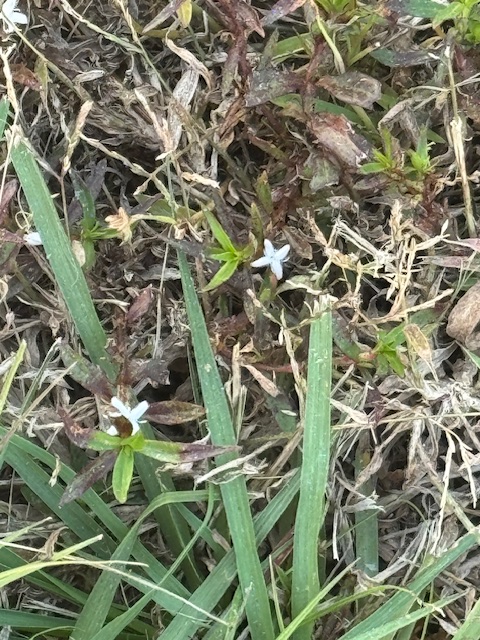
(Tiny, lovely flowers I spotted at the edge of the graveyard)

The trip back was long, but soon we were getting off the bus at Plates for dinner. This was another included meal, and we spent some time there chatting, eating, and thinking about what we had heard today. This mix of reality—some dark, alternative, hard-to-be-there reality—and good food and chatting is a good way to balance. I remember DeSean saying that balance was important. I am beginning to understand.

Dondrea and I decided to walk back to the hotel. Kathy took the bus (Doug was ill today). Michael R., Seth, and Pastor Ken headed to Mahogany Jazz Club. It was not as cold or windy, and we enjoyed the walk. We skipped out of the sketchy, dark street and soon were in a shopping and legal section. We went to Lafayette Square and then found our way to the hotel. I wanted to see this area in more detail.

After about thirty minutes, we reached the hotel.  In the lobby, we met the folks from our group and chatted for a while. Tomorrow is a hotel change, and Dondrea and I decided to work and pack. I spent the next couple of hours writing and packing.

Thanks for reading.
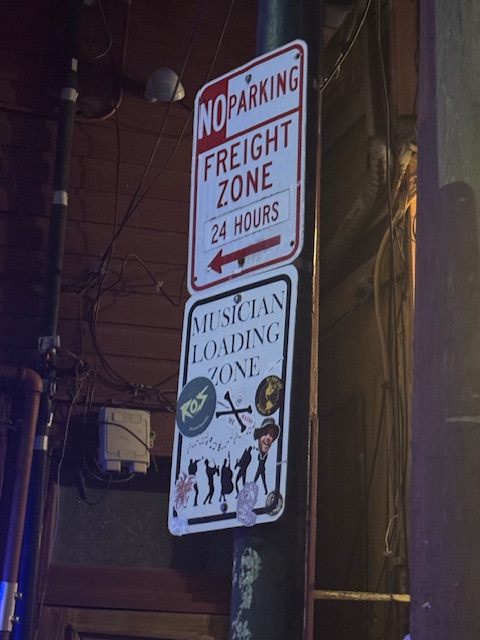


Monday Day 1 of TELTOS tour

I did get some sleep, but I was in bed late, and I woke a few times from noise or something. Sunday is the quieter day of the weekend, but there were still some folks with loud music or car engines. I woke minutes before my 6 a.m. alarm, and five minutes later, it blew me out of the comfortable sleep that had overtaken me. I got up, only to find that another ten minutes had disappeared while I sat on the bed. I think I slept sitting up.

I made coffee from the industrial coffee available in the room. I was mostly packed, but I completed the packing. At one point, my knees were on the case as I zipped it closed, and once again, I am happy with the overpriced luggage that I have used since I needed a roller bag with a suit holder.

I showered and dressed after finishing most of the blog. I had breakfast with Donna and Dondrea at 8:30, and I could finish afterward. As I dressed, I discovered I had no pants. Yes, after all the work of closing the case, my pants were all inside. Ugh! I reversed much of the previous process and retrieved my pants.

Dressed, less packed, I left my room at Le Richelieu Hotel and headed down to the lobby. There, I met Dondrea and Donna and learned that Donna’s flight was delayed (she would get to Salt Lake City, but the aircraft had been changed and her seat was moved to the very back). We picked an easy walk around the block to Envie Espresso Bar & Cafe for breakfast. All the tables were taken, it was cold, and nobody was sitting outside.

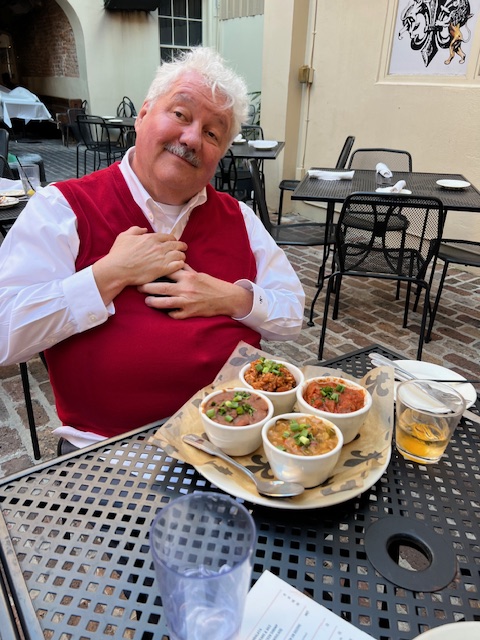
Creole Breakfast for Dondrea and me, and our new experience of boudin. This is a local sausage-like product that uses rice and cooked pork. Sort of a burrito sausage with Creole spices. Cheesy grits were nearly perfect, and the biscuit was excellent. Donna had the Traditional Breakfast but was unhappy with the bacon; Donna wants lightly cooked bacon, not crispy. Coffee was in large cups. It was an excellent way to say goodbye to our self-directed tour and enter the next part of the trip.

Donna was soon whisked away in a taxi after we spent another hour packing (or repacking in my case) and writing and publishing the blog. We checked out, and Dondrea arranged a cab to get us to the new hotel, The Hyatt Centric French Quarter, in the reused Holmes Department Store (story here), on the edge of the Quarter. It was a $12 ride, but it was cold and windy, and it was too far to roll bags.

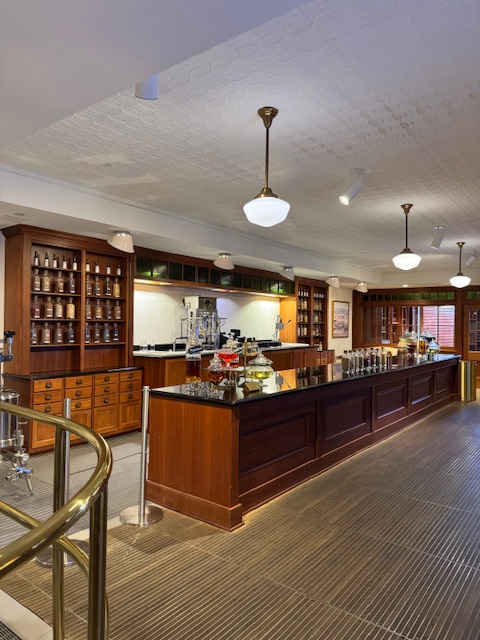
We got our new rooms, and soon I was thinking Le Richelieu Hotel was a better choice. But this was a new area for me, and I should not grumble. This is not the place for balconies. Soon, Dondrea and I met again, now just down to us as others were wandering in various areas, and headed to Sazurac House, as I always wanted to try this place.

We enjoyed the small free mixed drink that, when combined—three small cups—was enough to make me feel it! Their version of a Sazurac was good. We also enjoyed their other beverages, especially the rum ones. A surprise to us. We slowly walked through the three-story museum, or really, an ode to New Orleans mixed drinks. I got a few small gifts, and Dondrea tried to get one of the hard-to-get items in Oregon.

Next, we stopped at Hard Rock Cafe NOLA and, for $30, shared a salad and some Diet Cokes. But we got some quiet and something veggie to eat. It was good to unwind for a while.

Our tour with Telos started at 3 in a conference room, and soon we met the other folks on the tour. Our seven from our church is outnumbered about 4-1 by the South Bend church, but they are a friendly group. Our leader, DeSean, described some of the emotions he thinks we might experience. I have in my notes words like “be faithful to the encounter,” “power to confront injustice,” “balance to show up,” “worked trip for us as a sacred journey and not another group,” and “encounter tension as another as a problem to solve. No.”

We were then asked, “How are you arriving?” and “What hopes do you have for the times together?” Each of us answers the questions after introducing ourselves. I had sat close to the front to hear better, and was first (and had to be reminded to introduce myself). The answers varied, and folks’ backgrounds and expectations were more varied than I expected. The theme of learning and confronting injustice seemed to be one I thought repeated most.

From DeSean, I heard more words that I wrote down: “Being present is important…Legitimize to humanity.. .The world is wide enough…it is the nature of language…trying to say something to not offend is not going to be the solution…Education as liberation (is political), but not natural.”

I avoid telling other people’s stories, dear reader, as you know from this blog. I will just cover my experience and expectations. It was good to hear what others felt, but they will not repeat it here.

We then walked quite a ways back through the Quarter to Congo Square, just outside the Quarter and the old city limits. Here, as I had learned before, was where the enslaved people could meet, dance, trade, and connect. Many say jazz was born here, as people combined sounds to create new music.

On my previous trips, I had read and heard these stories. Please see the links if you are interested.

Our group was already behind schedule, and the park closes at 6. It was already getting dark, the wind bitter, and the temperature dropping. The walking tour of Louis Armstrong Park was rushed, but moving fast kept our guides on subject and us warmer. Half the group did the tour while the other did drumming and dancing in Congo Square, echoing back to the past.

My dancing before the brain tumor surgery was not great, especially rhythmic dancing. I try, but it is hard for me, and my balance issues make it even more difficult. I have to keep my eyes level, as my vision must follow the horizon to provide my only reference for my body’s position. Actually, I was always terrible, but now it is worse.

My drumming wasn’t terrible. We got to switch from dancing to drumming. But I was also trying to watch the dancing and learn what was happening, but that meant my drumming would get worse. I tried to be part of the sound and the feeling, to follow the lead of both, and to be a witness to the singing and dancing. While not entirely successful.

We tried to leave the park, but we got called back to hear some more thoughts, and then called out as it was closing, and dinner was awaiting us. We then walked a long distance, nearly split into two groups, and for a moment, we almost went our own ways. We managed to reassemble and reach Domenica without any losses.

We were in uptown or the warehouse district (it was dark, and I did not know this area), and soon we were headed through the kitchen (the staff banged pans and trays as we marched by, as a welcome) to the private dining area set up for us.

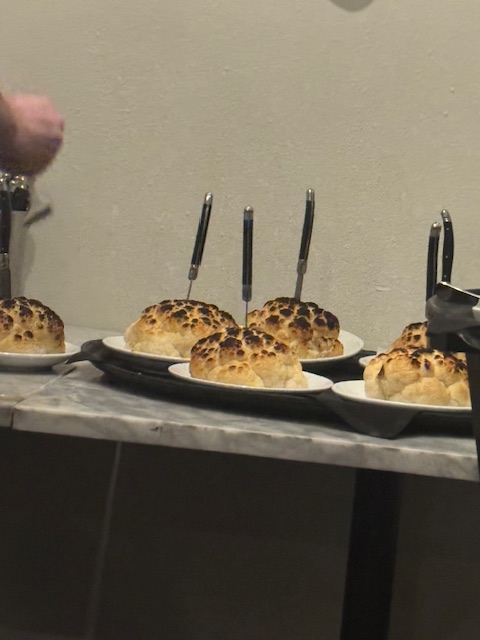
(not ‘chilled money brains,’ or “brains” in your best zombie voice, or Excalibur ala Domenica, but cauliflower roasted served with whipped feta cheese with olive oil)

The food was lovely, and Dondrea got a few recipes from the kitchen for some of the best lighter courses. We chatted and ate, with me buying the wine for the table (food, but not wine or drinks, are covered). We were getting to know the folks from South Bend, and I was happy to find them moderate to liberal and friendly. There were multiple courses served over a few hours. We had a mishap: all the chicken was gone because we realized there was only one set per table. But nobody was hungry or disappointed.

We walked back to the hotel, and after some Christmas Eve church business in Beaverton was covered, we all headed up to our rooms. I was soon writing this blog and texting Dondrea as we both worked into the late evening, encouraging each other.

Thanks for reading! We start again at 8.


Sunday Group Meets

I am packing and changing hotels today. I hope to finish the blog later today; otherwise, you will read this late on Monday.

Going backwards again, I was in bed around midnight after walking back with Donna and Dondrea to our hotel for one last night there, Le Richelieu Hotel. The night was windy, and the wind was surprisingly bitterly cold. Donna froze, and we all walked back with enthusiasm!

We managed, after first sitting split up and with various poor views, to move to good seats at Fritzel’s European Jazz Club, and the house bands were excellent, if not hot and fun. All eight of us now! Michael R. and Seth got the front seats, while the rest of us eventually got the top bench seat. We did about four sets with Kathy and Doug headed out before the last one, and Michael R. and Seth left a bit later. Ken, Dondrea, Donna, and I finished together, leaving mid-last set to be done before midnight.

The All-stars—the last, best, and house band—was made up of most of the same band we saw on Wednesday, but today blues and jazz were played, not ragtime. Still, it was good. The piano player, whose name I again forgot, from Wednesday, without the cigar this time, sat in for two songs and got to lead for those. His family was with him today (he moved them into some seats that became available between bands) and seemed to have a great time playing for them. He was excellent at playing and singing jazz. His hands flew, and again I did not know how we played that many notes. I was thinking of our own John Nilsen, who makes the piano sound like bell chimes. How these guys do this is a mystery to me. Excellent.

Again, it was Sunday night, and I only like Bourbon Street on Sunday-Wednesday before it is filled with troublesome drunk people who will soon be revisiting their sins when the cheap Hurricane fulfills its promises. Ugh! Look for me on Frenchman Street on those days, instead.

We had to wait before this as the folks arrived from the airport, all our flights worked, and we collected at Nepolean House. The hostess, looking besieged on a Sunday Night (but it was a game night for the Saints, the much-decried local NFL team), waited for us to collect everyone. A group of two tables inside (out of the cold wind) became available just as folks arrived. We were soon seated, and we enjoyed various sandwiches. Dondrea, Donna, and I got our excellent bread pudding, while Michael R. and Seth split a hot muffalata sandwich. Ken, Kathy, and Doug were at the other table and tried various sandwiches, including another muffalata. We chatted and caught up. There we left for Bouban Street and enjoyed some of the street bands on our way to Friztel’s. Bourban Street was already loud, but the crowd was subdued and cold. The wind was sharp now that the sun was done!

Before this, we picked for lunch after hearing the recommendation on our Grayline bus, and I was always curious, as I had never tried it, New Orleans Creole Cookery. I had only two beignets (which Seth said were like funnel cakes —I agree) and coffee before. And a mint julip with booze in it (I thought I ordered a virgin one; it was a happy bus ride back). I had the everything sampler while others picked food which focused on what they could eat (Ken and Donna) or wanted (Dondrea). It was not cheap, but it was excellent, and Donna, Dondrea, and I kept to an easy meal and a heavy meal with maybe a snack later.

We ate outside, and once in a while the wind would blow, knocking menus out of our hands or causing other minor problems. We had a heater above us, but it kept getting colder. The good hot food made it work.

Before this, we were on a Grayline Tour of the Oak Alley Plantation with more focus on the economics of slavery than the evils of the institution and the terrors it brought to its victims. The slave quarters are partially reconstructed, and there is an excellent message there in your own self-guided tour, reading the signs and seeing the engine of slavery. Most terrible for me is the names of the slaves they have found in the records (80% still existing, according to the tour guide, though the personal letters are gone). The plaque reads that these names may be all the record of these people that exists!

The tour and the grounds are great, and I stopped by, as I said, got a drink, and didn’t taste the booze at first. Wells, our tour guide in the house, gave a good tour, slowly brought slavery into the discussion, and then covered it. According to our guide, this plantation house represents the owners, not the source of work or wealth, but rather the users of the labor of others. The plantation seldom made money, and the original owners died trying to make it work. The land was eventually divided, with the sugar barons buying the crop land. The plantation really existed for about twenty years. I have often taught the irony of the South: that sugar and plantations never really worked—a story seldom told.

Before all of this, I rose at 6:30 (ugh!), wrote the blog quickly, dressed, and met Donna and Dondrea for our usual couple of thousand steps to the louder section of the French Quarter. We found Cafe Beugnet’s food, though still doused in a load of powdered sugar, better than the others we tried. We had, starting out at 8:30, reach the place just ahead of the 9ish crowd. Pastor Ken was missing, and we heard from him that he was running late. He just made it, and I was the last person on the bus, having got him coffee from the now-packed cafe.

The bus ride (and back) was enjoyable, with a video playing on monitors about the various plantations—most open only occasionally to the public—and the story of Hurricane Katrina told by folks in New Orleans. The ride along Lake Pontchartrain and over the Mississippi on the longest bridge of its type was fascinating.

The bus driver stopped first at the Whitney, and we will be there on Tuesday—I will leave that story for then. We then took the River Road along the Mississippi and saw more of the remains of the plantations’ parcels of land. Sugar Cain fields are everywhere, and the levy now tall on the Mississippi. Each was a narrow but long parcel serviced by the road and the river. Large trees in a line were often the only signs of what once stood there. But this was the land of back-breaking, deadly sugar work, and the dinners and privileges of others living off unpaid labor.

It was a good day and we learned and enjoyed, but never without paying or a tip. Unlike the famous threat of Odysseus against the sponges off of others’ labor, everything was paid for!

Thanks for reading!

Saturday Night Jazz and Food

Saturday ended with us saying goodnight to Ken, who had to walk back across the French Quarter to his hotel, and with us—Dondrea, Donna, and me—heading to our rooms at Le Richelieu Hotel. With my alarm set, I soon fell asleep and slept better despite all the noise. Saturday Night is loud in the French Quarter, though quieter here near Marigny, where the hotel stands.

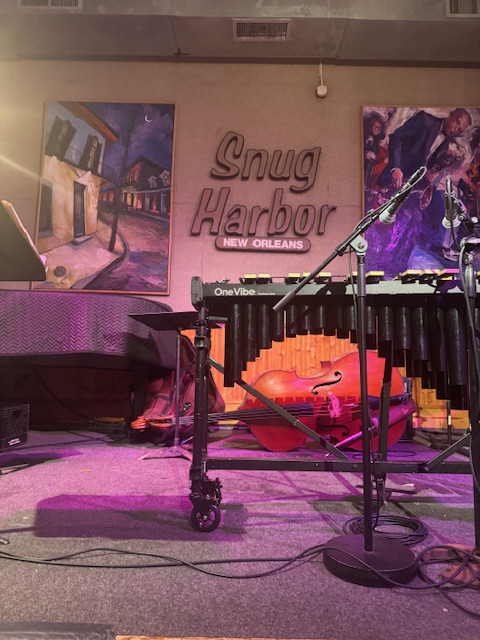
Chuck Redd Vibes Quartet was at Snug Harbor off of Frenchman Street in Marigny, not the Quarter, and we had tickets for four. Before this, we had a chaotic dinner at Snug Harbor Jazz Bistro, but the food was excellent. I had fried oyasters with, of all things, a usual baked potato with the usual fixings. Ken had three bowls of their local flavors: Jambalaya, gumbo, and estouffée. Dondrea and Donna, still stuffed from brunch, split a burger with a baked potato. Donna and Dondrea finished first and headed out to the stage to get us our table. Ken and I followed after we finished and paid the bill.

The Quartet was excellent, and again, we are amazed to find even better-performed jazz. It is like New Orleans ups the challenge to be better for us each night. While a vibraphone is not something I would pick as a jazz instrument, Chuck Redd owned it. The band members, all assembled for this play, were excellent (I don’t remember the names), and some were well known, according to what I was told. From the crowd, a legendary drummer took over for a few songs, and he seemed to challenge the band with his playing. I saw Chuck Redd smile or nod when the drummer did something tricky to the sound and then responded on the vibraphone with some matching play, add something,  and then looked at the drummer with a ‘so top that’ look. The bass player and gitar player also had their chance. It was a night of jazz challenges called and answered.

Chuck’s wife we learned was in the front row and was clapping, smiling, and call out through the show. The last song was her’s, named for her (sorry, again I forgot the name), and there was a pause, ever so slight, and there was a single clap from her seemly built into the song, and a big smile on Chuck as he then flew across his instrument and produced a melody that seemed to caress her. It was wonderful to see this and hear her laugh as he surprised her with little changes.

Before this, we found seats at The Maison, and I had some chicken wings from a basket that Ken ordered; he flew in today, and we had music and caught up. Next, we stopped by the same art show, Dondrea and I both got notebooks for only $5 (I then lost mine at Snug Harbor–setting it down somewhere and forgetting to get it). Before this, we met at the hotel as Ken walked 25 minutes from the other side, where the Hyatt is.

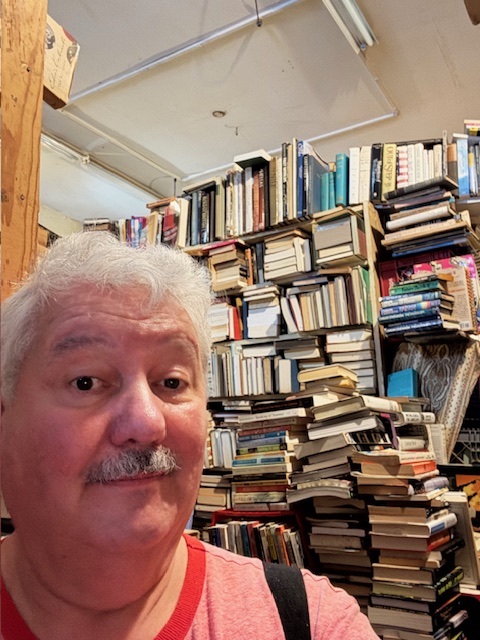
We went shopping before Ken arrived, and this included multiple used book stores with one overflowing and a tight squeeze between things. I picked out a few things at each and had them shipped home to Oregon. We also stopped by some mask shops and the cooking school to get a few items (again, Dondrea and Donna had that shipped home).

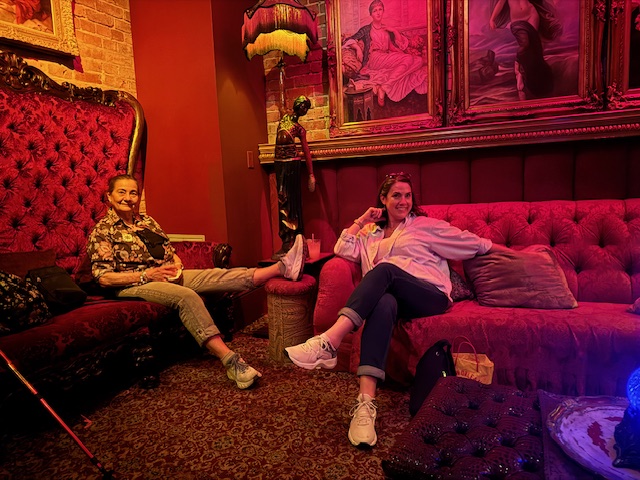
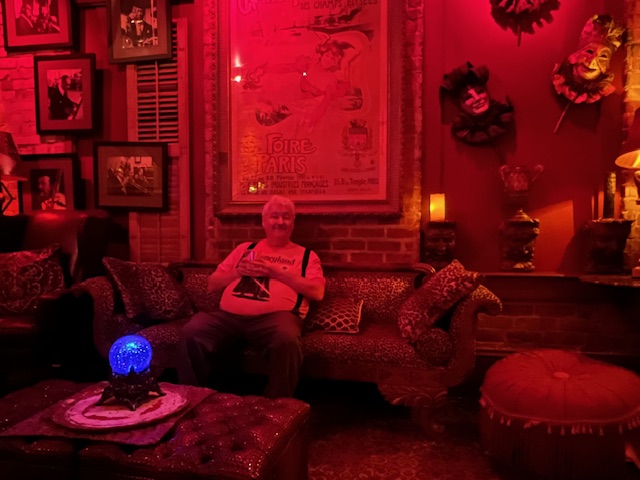
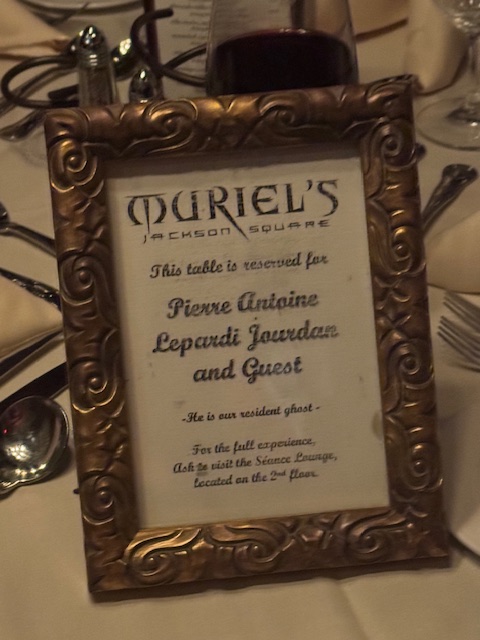
We then stopped by Muriel’s Jackson Square and sat for a while to enjoy some drinks from the bar and their Séance Lounge upstairs and past the ghost table. The table is set to calm the previous owner who took his life after, according to what I read, losing his home, now Muriel’s, in a poker game. While we did not see any ghosts or anything strange, we did meet quite a few folks and chatted while enjoying our drinks.


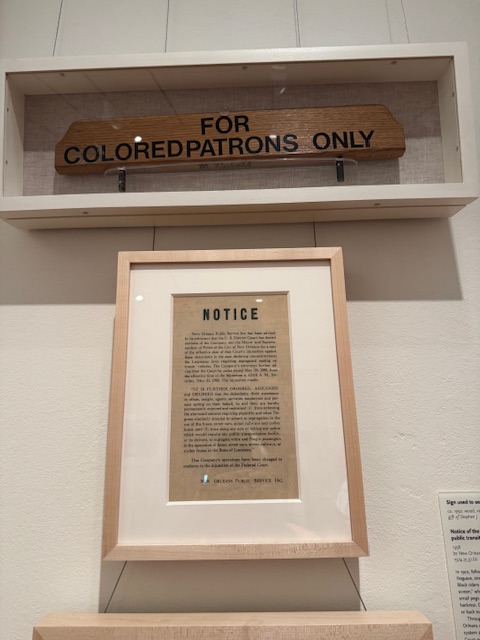
We also stopped by the marvelous New Orleans History Museum, which covered the area’s history and the Civil Rights movement in NOLA. It was a good introduction and I liked it. We met some folks who tried the voter test, a voter suppression technique before it became illegal, but they failed on the math section.

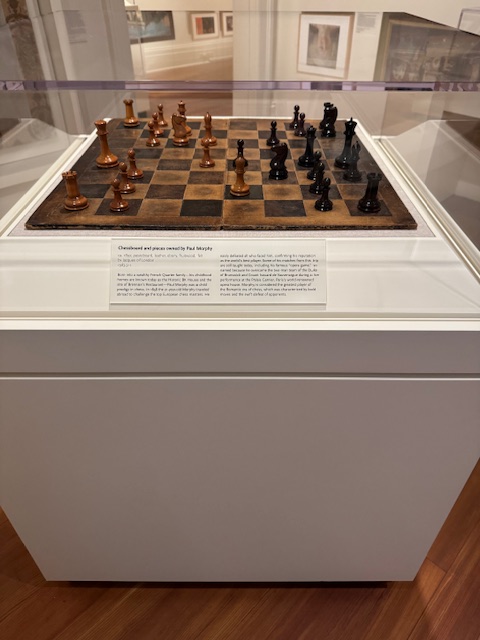
(One of my chess hero’s set)

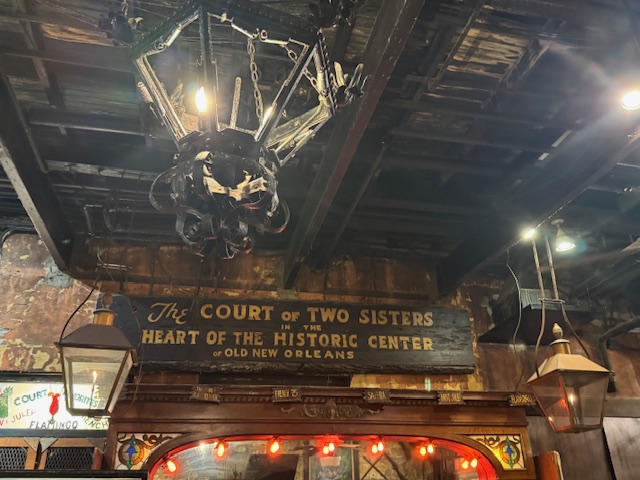
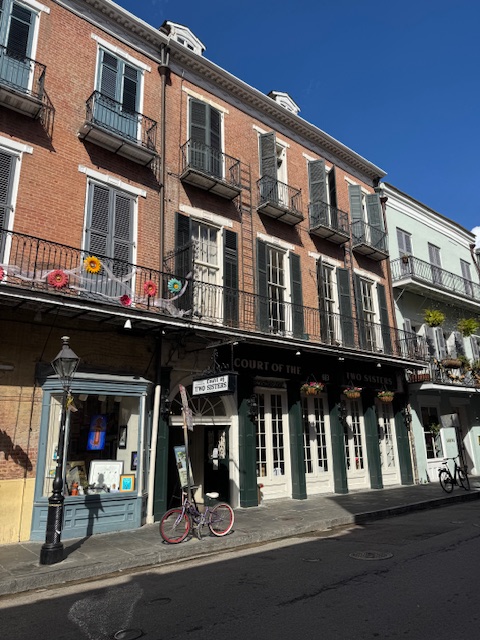
Brunch, with its lines of food, banging of plates, and often average food, is not my usual scene. The Court of the Two Sisters is rightfully known for its brunch on Saturday and Sunday. We made no reservation, but arrived before 9, when the tourist swarm seems to hit, and got in without waiting.

I tried little bits of everything I thought was good. The food, staff, and music were terrific. The turtle soup was good, and it was only my second time having that. I was smoky and good.

Running out of time this morning…I will say I had written the blog the night before…slept in to 7ish and wrote some postcards, and then waited, then met Donna and Dondrea to head to brunch. Thanks for reading!