Looking back on Thursday morning to Wednesday, I see it as a strange mix, like a salad dressing that you keep having to shake, of the past and current. Both seem to switch back and forth without warning. I am looking at a cannonball stack; the cannonballs are real and found in the area, but modern cars and shops are everywhere in the same view. I have pizza, definitely not an American Civil War meal, in sight of two statues and at least one gun pointed in my general direction. Everything seems uneven and not congruent.
Wednesday was a good day, and though I struggled with my cough (lots of cough drops, no sugar), it was as good as I hoped, and even maybe better. Wednesday started with my alarm at 6, too f**king early for me with the time change of two hours, and I soon showered (the shower was just set it to max and go), dressed (selecting a Disney Darth Vader as it was the lightest one I had), and found breakfast downstairs in the lobby. It was the usual complimentary industrial breakfast and made without any flair (in Chicago, the food at the Hampton Inn at the Majestic was better, or at least seemed better). Still, it was free, and I wrote the blog for about an hour, having to rush the last bit.
I returned to my room, hid the laptop (just enough to make it an effort to steal), and grabbed a notebook to record any thoughts (it is less trauma to lose a notebook than a laptop), my book about the battle by Wiley Sword, pens, cough drops, and the Hilton bag with two bottles of water the hotel gave me at check-in.
It was already hot and sticky, heading to 94°F (34°C), and the walk was six blocks (short ones) to the bus station. There, I enjoyed the air-conditioned train depot, which had been remodeled (or rebuilt, since this area would have been completely submerged in the last great flood in 2010). Soon I met some folks on the trip and waited for our start time. Michael, our driver, who was blessed with a friendly voice and manner, was also our tour guide and soon had us headed south to the battlefields.
He provided the setting of the battle: the last chance for the Confederate Army to win big, and Nashville was the target. It was occupied by 8,000 troops, and another 30,000 were on their way. These troops needed to fight a delaying action while withdrawing to Nashville. General Hood, a favorite of Confederate President Davis, was put in charge because he was an attacking general. But historians often portray him as thoughtless, delusional, or even intoxicated (though this claim is widely disputed), and he ends up attacking reinforced positions in Franklin (1864), costing his army 1/3 of its strength. This is the battlefield we come to visit, one of the bloodiest battles and the last offensive operation of any size made by the Confederate Army against a Union Army.
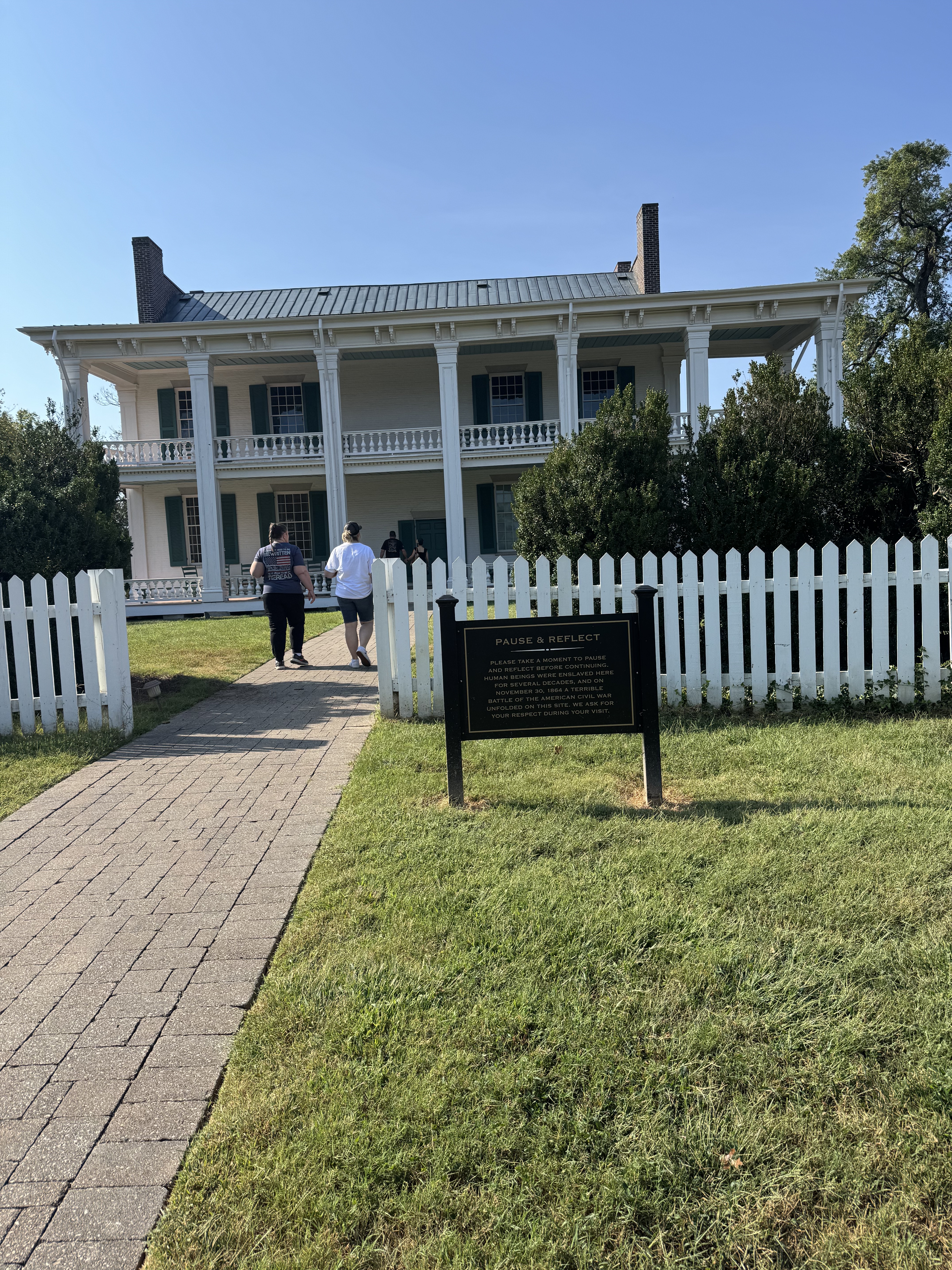
The Carnton House is our first stop. Eric A. Jacobson is our tour guide and also the CEO of the Franklin Trust and writer of many books about the battle and the people in the area. He is hypnotic as he weaves the tale of the house, the family, and then the battle. He explains that the English King forced slavery on the colonies as a cynical economic move to make cash from them. The US was saddled with an unresolved issue that split the country and infected politics, people’s lives, and the economy. The rapes, the confused families, and the abuse are all part of this infection, and the depth of the loss and depravity was endless.
Eric describes the McGavock family as willing participants in slavery and as using slavery to make their plantation successful. They did not support the war, believing it would be difficult, if not impossible, to win (and that the results were unlikely to be positive). Some of their children fought, and one died at the house in Franklin from wounds received in the battle (1864).
Mariah was a slave at the house; her bust is there in the house, and she was freed and outlived them all (into the 1920s). Mariah lived in Franklin, and Eric imagines them meeting later by accident in town, an awkward moment. According to Wikipedia, she worked for the family as a freed person, but Eric suggested otherwise.
Eric took us upstairs; no photos inside the house, and bloodstains marked the exposed wooden floors. Other than the paint and wallpaper, the house was original (with some items also from the family or at least from the time period). The house served as a hospital during the battle, mostly for Confederates. The family created a cemetery for the dead, and it is the largest Confederate cemetery.
This is 1864, and Eric explains that the doctors/surgeons knew their profession after years of war. Head and abdominal wounds were known to be unsurvivable, and soldiers with these wounds were allowed to pass. But the survival rate was 70% for those who reached Carnton House, according to the information we have, said Eric, and they knew their craft, he also said.
I managed to get some pens and a map before being the last person back to the bus. Lunch followed after a brief drive to the other side of Franklin. I picked the pizza joint; nobody joined me. I had an iced tea with my all-veggie pizza (trying to pick something that was filling but not likely to make me sleepy). Franklin, like lots of small towns, was full of shops with various quaint gifts and local products. This downtown was built from 1900 to the 1940s. They knew their tourists, and there were two distilleries selling, though I did not visit them, local booze at tourist prices. A slightly damaged Confederate (his hat appears to have aged poorly) was on a tall column from the 1900s, from the Daughters of the Confederacy. Hmmm.
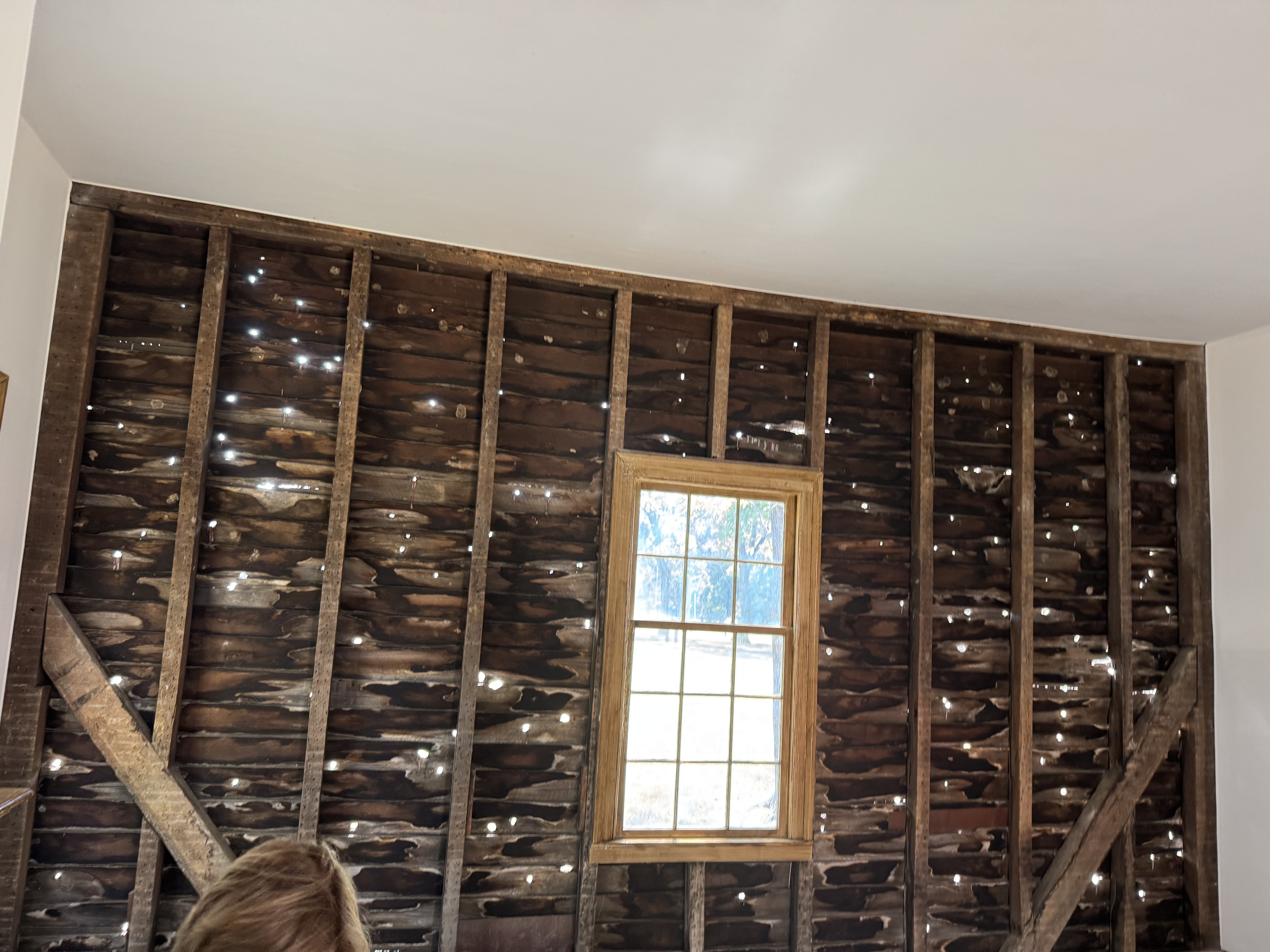
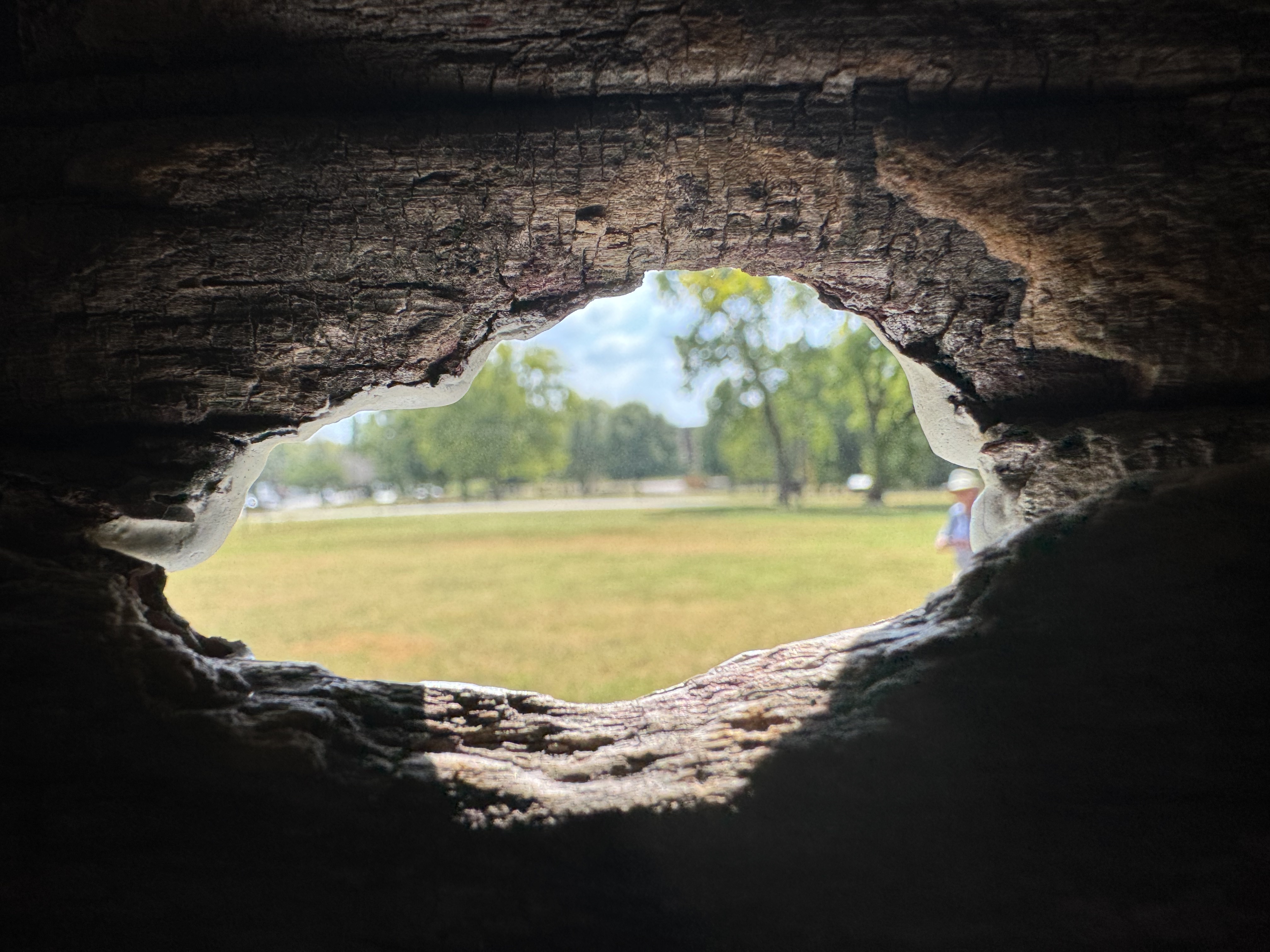
The Carter House was on the battle line, and the family, having been told that it was inconceivable (my words) that Hood would attack such a strong position, were trapped in the basement while their house was now in the battle. The walls of the house show holes and even cannon shot. The farm office walls still show the holes, and the plaster was removed recently to both show the war damage and to help the wood dry out and not rot. It is an impressive sight.
The Carters were slave owners, and they made their money using slave labor and growing crops on their fields, including, though it was not a usual place for it, cotton. The cotton gin building across the street was also on the battle lines, and a Confederate general was slain trying to organize the attack. Our tour guide for the Carter House took us into the basement, where the families stayed during the battle. A chair sat there for everyone they knew who was there, filling the walls. There were likely slaves and others who went unrecorded. Some of the chairs were made there. We saw one upstairs that was damaged by a bullet.
I learned later that the stink of death lasted for years here and that it took a long time to get the dead horses off the property. I was told that the shoes and nails from the horses were reused to fix the houses. The yard was full of bodies when they left the house. The Lotz House is across the street and is also a museum.
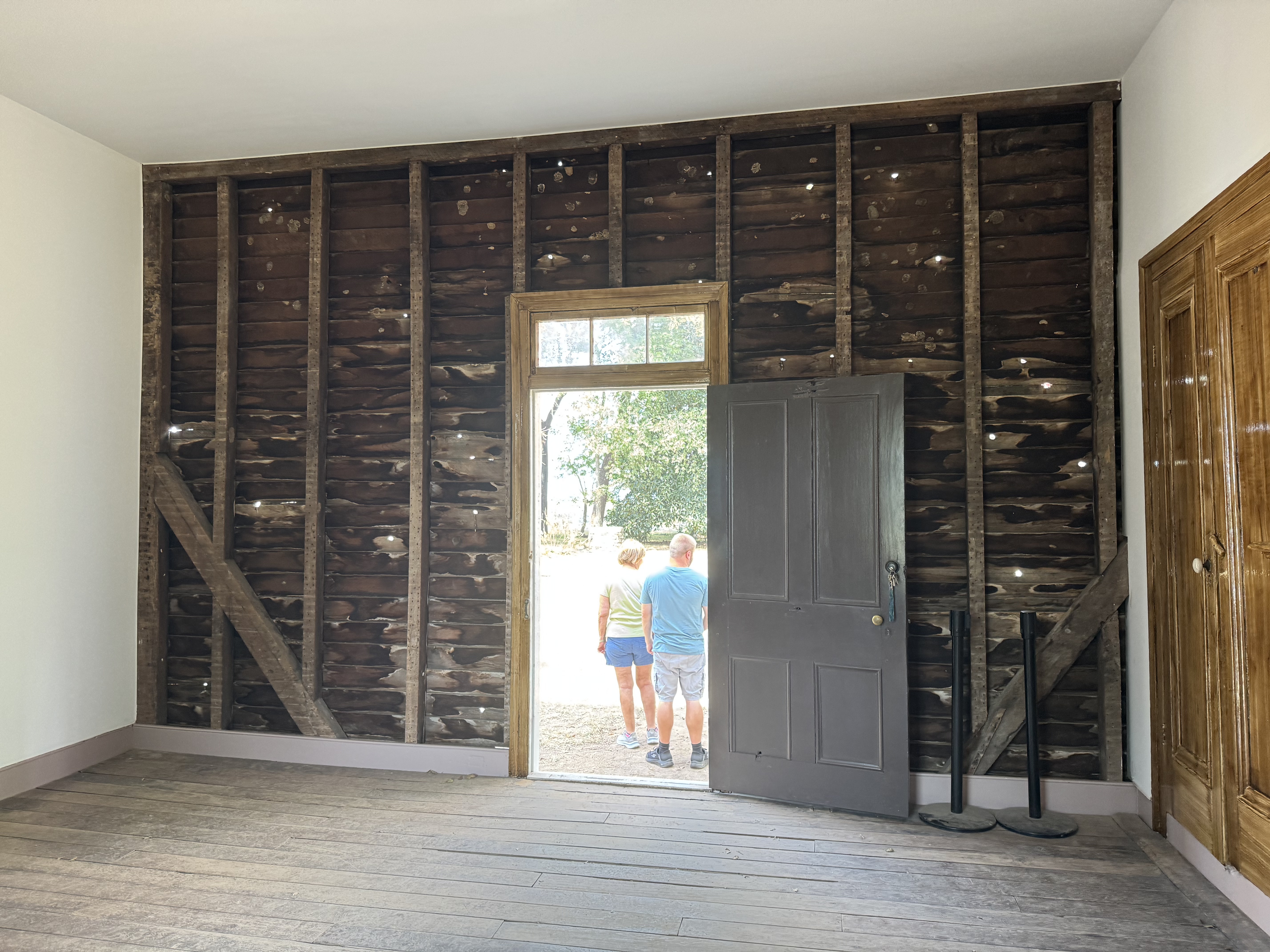
Next, we traveled for a minute, and Thomas gave us a fun and strange talk about the house and the family who lived there. The Lotz family filled the house with examples of excellent carpentry and modern items. According to Thomas, this was to sell the owner’s skill for new construction. The Lotz lived in the model, including the then-modern coal fireplaces. The house is also filled with findings from the battlefield, including a huge pot found filled with 10,000 bullets.
Thomas imagines the young daughter’s experience, Matilda Lotz, as the Union troops raid their home and slaughter their livestock, with the child watching her favorite cow being slain. The daughter would leave, travel the world, and become a renowned artist (knowing the Hursts after moving to California), with her paintings of animals seeming to show the animals with joy (The house has quite a few of her paintings).
I later learned it is considered one of the most haunted places in the USA. Thomas also covered that the dents in the floors are from boot nails that were in fashion for a short time during the Civil War (the family would not have worn them). He also points out two blood stains (but refuses to do a “blood tour”). The boards are interrupted with newer work, without the dents, and held in with horseshoe nails (salvaged from the dead horses, Thomas tells us). These are the cannonball hole patches. There are two, and they crashed through the roof and all the floors.
The spooky feeling second-floor family room, I remember being discomfited by the room before I learned about it and the haunting even later, was mostly decorated with new wallpaper, but the pattern was recovered from fragments found in the walls during repairs. This room was where 40 dead and wounded soldiers were found. They ran into the house after being wounded. Thomas had said there were bloodstains everywhere, and he was not going to dwell on it.
I was happy to leave Lotz House, but glad I had made the visit. Michael then drove us back with only a few comments. We were all tired out by the constant standing and heat. Thomas, Shea, and Eric all put their own spin on events and history. I enjoyed their talks and could see each as a facet of the same gem of history. Thomas, kind of a retired Indiana Jones (having dug up artifacts from his boyhood and later recovering lost soldiers from now-private property), told Matilda Lotz’s story as a hero who survived and made a famous life after the battle and after seeing her animals butchered for food. Shea, eight years of tour giving, tells the story of the families, a product of their time and giving no excuses, a tale of just surviving and recovering. Shea also reminded us that nearly every one of the bullet holes was someone aiming to kill a human. Eric, the scholar and CEO of the Franklin Trust, tells the story of a family who became the owners of a hospital and graveyard who must burn the carpets as the house is soaked with blood, not of battle, but of mercy. The stench of blood stayed with the house for years, one of the family members recorded.
I sat on the bus trying to make sense of what I had seen as Michael returned us to Nashville. I knew the CSA had lost the war here. It was now full of neon and music. The forts are mostly gone; one is a park (under construction and unavailable for a visit this time). I walked back to my hotel, took a short nap, and then headed out.
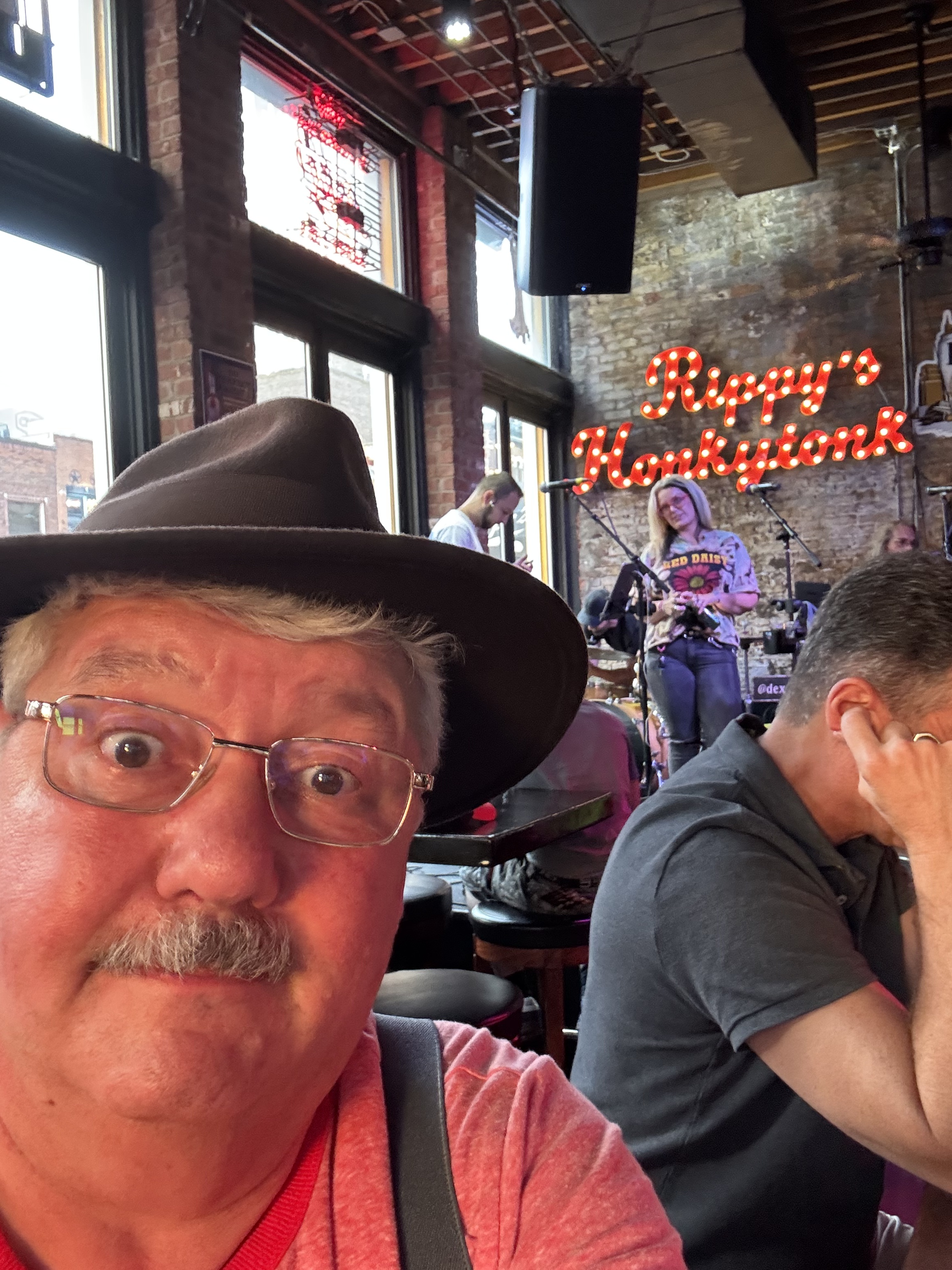
(I am a stranger in a strange land)
I walked Broadway, filled with tourists with drinks too large for usual consumption. I heard country and some hillbilly rock here and there. I picked Ripply’s BBQ because it had a sign with a pig on it, found a spot at the bar, ate too much BBQ, and listened to live music. I sang along with songs older than the people singing them and noticed only folks with gray hair knew the words. I was also the only guy with a cowboy hat; the others were white hats (often with feathers) and on women’s heads. The baseball hat was the new men’s choice; I could see now. I did not care. It was good to be alive in this silly place doing silly things and singing.
I left after paying too much for the beers and about the right price for the BBQ, and walked up three sets of stairs to Nudie’s place’s roof bar (a clothing designer’s name, not a nude bar—this is boots and hats with clothing). I got a ginger ale (for the cost of a real drink) and looked at the street all aglow. Another older man stood next to me, started a conversation (us gray-haired people stick together), and I told him about the tour; they might take it, and we both looked out at this crazy happy place, and I said words to the effect, “Here is where the war ended, and the country we know was made possible.” Bubbles were blowing out of the Rock Bon Jovi place next door. It seemed a good place to make a country.
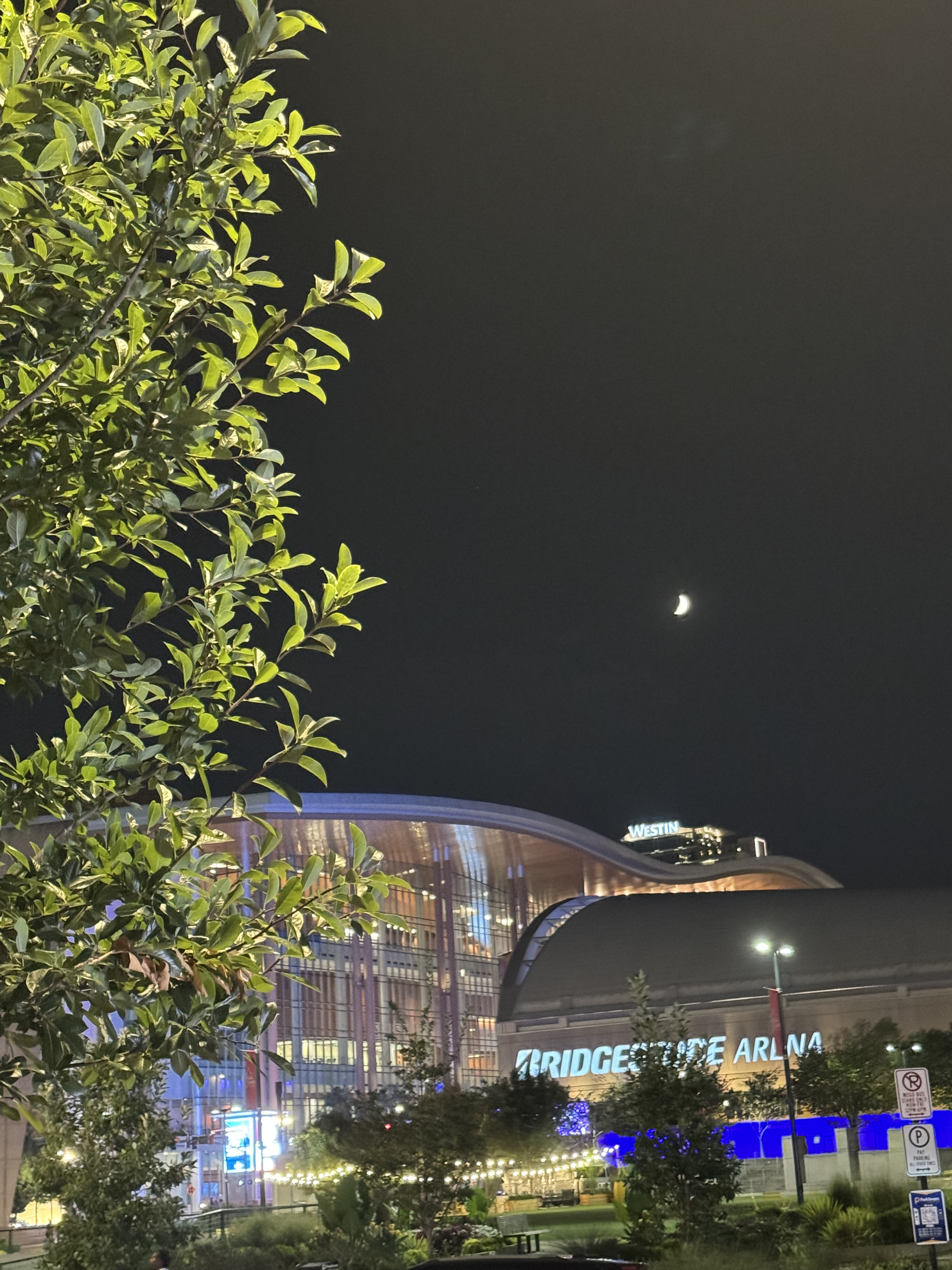
I walked back, happy that I had only two beers in the 84F remaining heat and humidity. A panhandler hit me up, and I waved them off. Reaching for my wallet alone on a darkish street seemed unwise. I talked to more folks about the tour in the lobby (more older folks). I went to my room, and soon slept too early for the time change. I woke a few times. I dreamed a lot, but I can recall little other than that there were tour guides.
Thanks for reading.


